
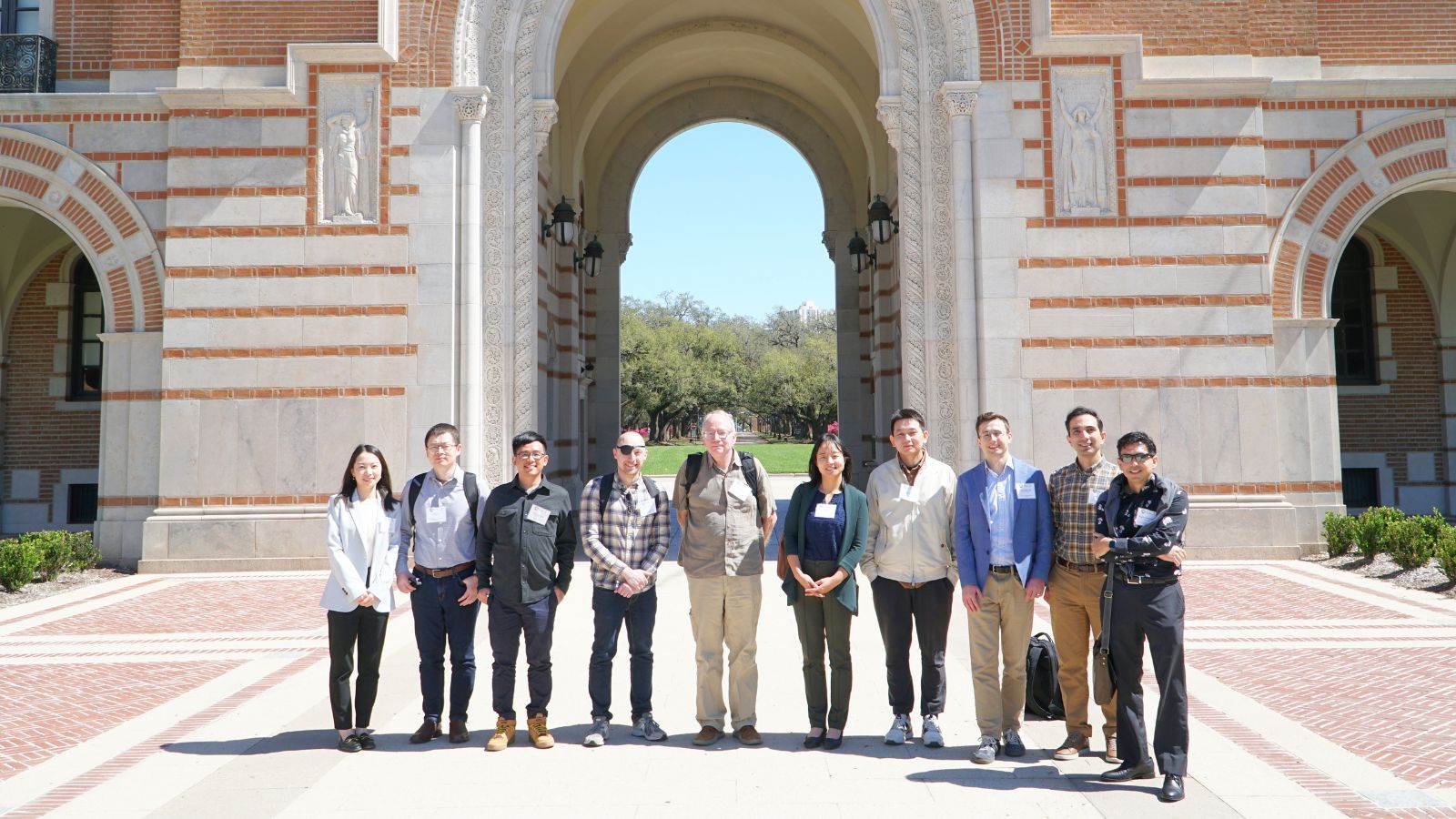
On March 13, 2026, Rice University hosted the Rice Workshop on Large Language Models (LLMs), bringing together over 100 researchers, students, and industry professionals for a full day of discussions on the rapidly evolving field of AI. Supported by the Creative Ventures Fund, the Ken Kennedy Institute, and Rice’s Department of Computer Science, the workshop explored both the promise and challenges of LLMs, including AI safety, interpretability, and human-AI collaboration. The event was organized by Hanjie Chen, assistant professor of computer science, and Vicente Ordóñez, associate professor of computer science, who led the day’s program and guided discussions connecting attendees from academia and industry.
Why large language models matter now
Large language models have become foundational tools across industries and research domains, enabling significant advances in natural language understanding, text generation, and machine reasoning. As these systems are increasingly deployed in real-world applications, understanding their limitations, safety challenges, and ethical considerations is critical. Discussions emphasized issues including AI safety, model transparency, fairness, hallucinations, and misalignment in high-stakes environments.
Workshop participants highlighted a growing consensus that scaling LLMs alone is insufficient. Future progress in LLM research will depend on improved evaluation methods, stronger reliability frameworks, and deeper integration of human-AI collaboration in system design.
Exploring advances in AI research
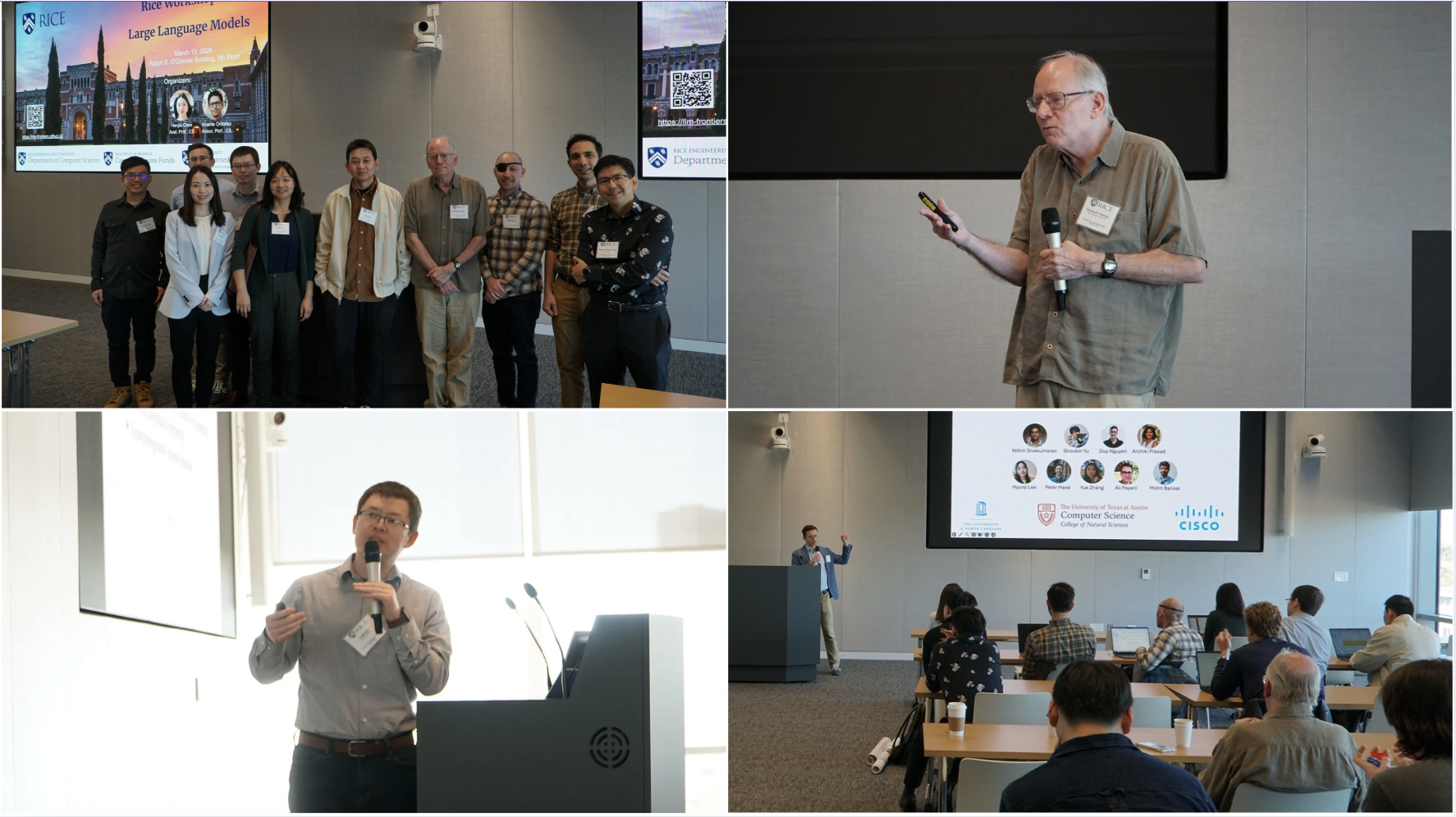
The workshop brought together leading researchers from institutions across the United States to share insights on emerging directions in artificial intelligence and large language model development. Invited speakers included Raymond J. Mooney (University of Texas at Austin), Yangfeng Ji (University of Virginia), Arman Cohan (Yale University), Mark Yatskar (University of Pennsylvania), Vera Liao (University of Michigan), Jiawei Zhou (Stony Brook University), Kuan-Hao Huang (Texas A&M University), and Elias Stengel-Eskin (University of Texas at Austin).
Talks and discussions covered LLM safety, evaluation, training strategies, interpretability, multimodal and agentic AI systems, inference-time steering, and human-AI collaboration. Poster sessions allowed students to present their latest work, receive feedback, and engage with faculty on practical and research challenges in AI.
“The workshop attracted a diverse audience, including current and former students and representatives from Houston’s energy industry and beyond,” said Ordóñez. “I felt there was a genuine interest in making this a recurring event.”
He added, “Audience members actively engaged by asking questions to the guest speakers. Our students also interacted with faculty members from other institutions during Q&A sessions and poster sessions where they presented their latest work and received feedback.”
Chen emphasized the success of the event and its forward-looking impact: “We are grateful to our invited speakers for their insightful talks and to all the attendees for their active engagement. They made this workshop a true success. The future of large language models is full of opportunity, and we’re excited to be part of shaping it together.”
Organizers noted that the workshop achieved its goal of fostering interdisciplinary connections and meaningful discussion across the research community. They hope the event will spark new collaborations, follow-up discussions, and future iterations of similar gatherings at Rice, further strengthening the university’s role in advancing large language model research, AI safety, and emerging AI technologies.
To read more about the talks, visit the workshop’s website.